Introduction
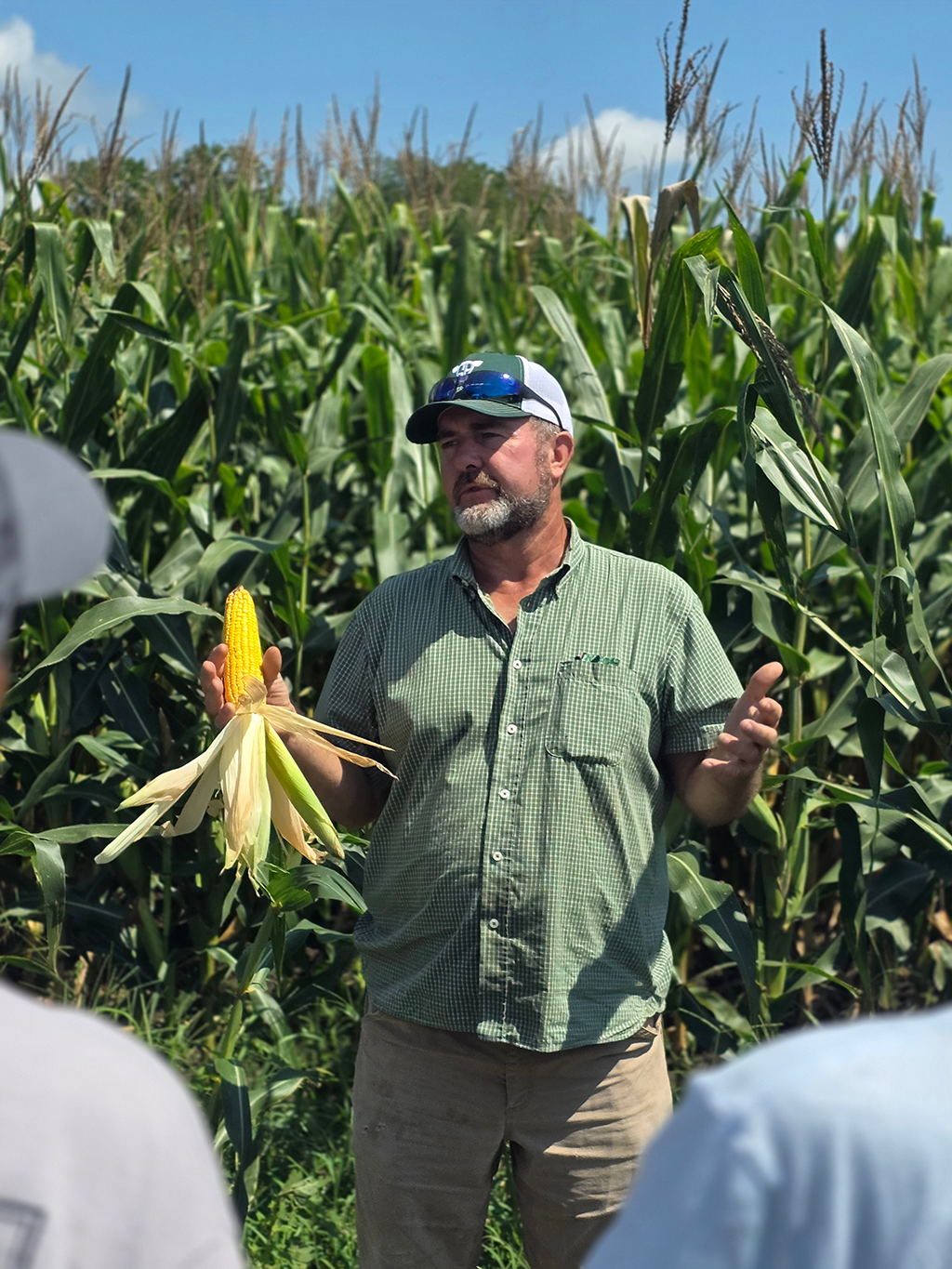 Jack Geiger standing in front of his corn field holding a piece of golden corn and presenting about his organic practices to a group of farmers.
"The easiest way to understand my farm is that I farm like my grandfather farmed 100 years ago, except I use technology and modern mechanization and management to try and be even more efficient and scale-oriented, with more of a focus on the economics of it.”
Jack Geiger is a sixth-generation producer in Northeast Kansas running Geiger Farm, a vertically integrated farm of about 240 acres. He works on his NOP (National Organic Program) certified organic farm with his wife, Deborah, and family. He focuses on low-input, sustainable and systemic diversity. In German etymology, Geiger means “fiddle maker,” “dancer,” “musician,” or “artist,” and Jack Geiger displays his artistry in the management of his diverse operation, and his investment and connection to the health of the land, surrounding community and next generation of farming.
“Grandpa tells the story of cutting down trees to feed his cows, because the leaves and twigs were the only forage [during drought].”
Jack’s background and family history have greatly shaped his perspective on farming and contributed to his approach to drought management. He is the second-youngest son (out of six sons) in a German family. While he did not inherit the family farm, he chose to settle in the same county where his family moved and started farming before the Civil War. “We have a cross-generational genetic memory…or intergenerational knowledge transfer [of farming the land],” he said. Jack’s grandfather farmed during the Depression era, and lack of rain greatly affected his ability to grow crops. His grandfather’s dedication, resilience and adaptability were influential to Jack’s approach to working on the farm. He observes the land around him and adapts as needed.
Introduction (cont.)
Additionally, Jack has a bachelor’s degree in agronomy with a focus on soil genesis and natural resource development from Kansas State. He studied at a unique point in time when some of his professors had previously farmed and gone broke during the farm crisis of the 1980s. Jack’s focus on low-input sustainable agriculture was born from a model of how to economically survive the 80’s farm crisis.