National Drought Mitigation Center UNL logo

Steve Knutson Ranch

Introduction


Steve Knutson

Steve Knutson has been the operator of his current homestead near Milesville, South Dakota, in the west-central part of the state for the past 30 years. When he purchased the ranch from his father-in-law it was run as a traditional cow/calf operation with hay ground, in addition to growing wheat and corn. This included the use of commercial pesticides, herbicides and fertilizers.

Steve’s management philosophy quickly began to change about 25 years ago. As he was mixing chemicals, he would physically feel sick and knew this wasn’t right. Also, when discing or tilling he realized he had a terrible compaction problem and the soil was lifeless. He wanted to operate his ranch in a healthier way, so started learning all he could through online seminars, documentaries, and talking with local USDA Natural Resources Conservation Service (NRCS) staff. He believes his new management practices have resulted in several benefits, including better production during drought years.

The Switch


Drought resilience was not his biggest concern in the beginning – it was stopping the use of chemicals. “It just made common sense. I was applying chemicals to the crops I was growing to feed my kids and grandkids. It actually makes me upset when I think about it,” he said. “If your wife brought a sandwich out to you in the field for lunch, would you spray over the top of it and then eat it?”

He wasn’t quite sure how to do it correctly on farm ground, though, so the first major decision was to switch the operation to strictly cattle production.

In 2000, the NRCS Environmental Quality Incentives Program (EQIP) provided cost-share to replant the farm ground back to native cool and warm season grasses (e.g., big blue stem, little blue stem). In addition, he planted four separate tree groves with bird nesting and food plots next to the tree yards. However, it took a couple years to reestablish the grass and it was very dry during this time. Steve had to replant the grass again and wasn’t able really use it for three or four years. “The cost-share helped with the planting, but the main expense was taking that land out of production for several years, which was a financial challenge,” he said.

The next major decision was to change the grazing management. NRCS staff recommended rotational grazing for cattle, where you subdivide pastures into smaller parcels using electric fence and move your cattle more frequently to better utilize the available forage. So, he expanded his water lines and moved his cattle every three weeks through 80-acre parcels, which was recommended at the time. “I would graze grass twice a year, but I wasn’t really seeing that much improvement in the grass, soil or production over time, which was not encouraging and hard on my patience,” Steve said.

On reflection, he felt that he was underutilizing and potentially harming his grass by leaving too much the first time and trying to graze it again the same year. If it didn’t rain enough in the summer, it would be even more difficult for the grass to adequately recover before the second grazing.

Learning Over Time


A patch of big blue stem in front of a field of cattle
The new planting of big blue stem thriving. Photo by Steve Knutson.

Steve said it’s been a learning process. For example, over the years, he’s learned that quicker moves are more beneficial. As recommendations changed with people gaining more experience with these systems, he continued to modify his rotation. Specifically, in 2020, he began moving his cattle daily on four-acre parcels and only grazing each piece of ground once per year.

Receiving a cancer diagnosis in 2021 only cemented Steve’s desire to continue these practices. During treatment, he decided to sell his cattle herd, but bought a herd back once he recovered a year later. He also diversified with bees, chickens and fresh organic fruits and vegetables, which became the new standard of living.

After learning more about regenerative agriculture and attending a grazing school in 2025 sponsored by the South Dakota Grasslands Coalition, he once again cut the daily grazing area to two acres to maximize forage uptake and manure deposition for fertilizer. With this strategy, in 2026, he ran nearly 40% more cattle on the same two acres parcels and does not expect to harm the grass roots.

With advancements in technology, the purchase of livestock collars (virtual fencing) will also soon be implemented, which will allow Steve to remotely monitor and guide cattle movements. This will require less labor with the benefit of being able to move the cattle multiple times per day. The goal is to continually strive to regenerate the landscape through more managed grazing, which benefits both nature and the livestock production system.

Management Benefits


Steve’s new management practices have produced many benefits on his operation. Most importantly, the soil is healthier. No poison is being applied, and organic matter and carbon is increasing in the soil. The intensive grazing system is stimulating more grass and root growth; cattle are trampling grass into the ground and leaving manure (fertilizer) in more concentrated areas; and life is returning to the soil with worms, dung beetles and numerous other insects now present, which all lead to more organic matter, carbon and healthier soils.

With the increase in grass production, the need for supplemental feed has also diminished. “With the original three-week rotation, I used to feed a bale of hay. It seemed like the cattle weren’t as content and were missing some nutrients,” he said. “With the daily rotation, this isn’t the case and it’s a satisfying feeling to watch the cattle go in and attack new ground and they seem to be more content and not wandering around. They clip everything down, including the weeds.”
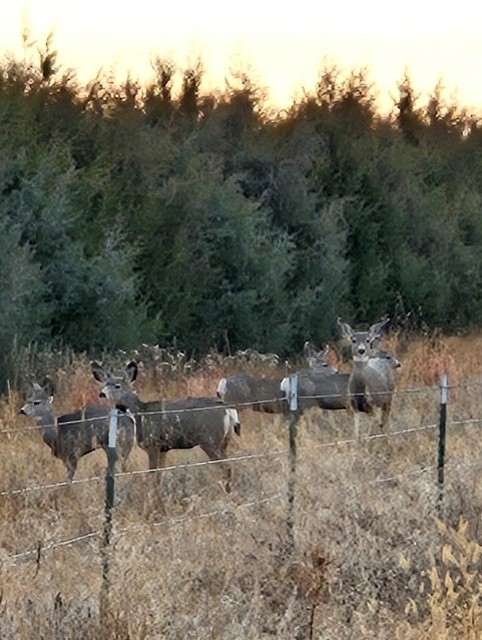
A group of deer stand in front of a row of trees
Increased habitat for wildlife and birds in the shelterbelt. Photo by Steve Knutson.

As a side benefit, Steve believes the drought resilience of his ranch is also improving. “When I started to implement the changes, I didn’t necessarily have drought in mind, but the grass production hasn’t really been affected by recent drought conditions,” he said. “In the past, I could walk across my pastures and see bare spots in the grass, and they were hot to the touch. With grazing improvements, there’s more cover (armor) left on the ground and those areas have filled in with grass, protecting and benefitting the soil by increasing organic matter, which holds more soil moisture and reduces surface runoff.”

The increase in native grasses, like big blue stem and little blue stem, has contributed to drought resilience. They have dense and deep roots to access water and hold soil together during dry periods and add organic matter to enhance soil quality and moisture retention. “When it used to rain, I’d see water running off the pasture and down my driveway. I don’t see that as much anymore,” he said “It’s soaking into the ground better, where it can be used by plants. It’s been dry this year with nearly 30 percent less rain so far, but my grass is still in great shape, and I don’t plan on having to provide any supplemental feed this winter.”

Steve sees another benefit to letting nature restore some of his ground. For example, he used to limit his beaver population but now encourages them. They would build dams and widen the stream, making it boggy and hard to cross. However, encouraging them has resulted in more water availability throughout the year. Since he can now run more cattle on his other pastures, he can keep them out of those draws, which has turned those bottoms from mud bogs into more vegetated and stable grazing areas if needed.

Steve has also noticed an increase in bird populations with habitat improvements. “I didn’t used to pay a lot of attention to the different varieties of birds, but I have been the last couple of years and am noticing new species,” he said. The American Bird Conservancy is going to conduct a bird inventory next year to begin monitoring it more closely. The increase in birds is seen as important not just for their own sake, but some also eat flies from the cows, grasshoppers, and other insects, which is especially important since control chemicals aren’t used on the ranch.

There’s still more work to be done, though. For example, reducing soil compaction is an ongoing issue. However, “it’s interesting and actually fun” seeing how the cattle behave under the new system and impacts to the landscape, Steve said.

His goal is to rebuild the landscape back to an improved state but do so in a way that allows the next generation to take over the operation. At the same time, he’s working to increase the number of cattle that can be run on the same ground and make it profitable enough to hire a manager to run the day-to-day operations, but still worthwhile for his two children, who are not ranchers, to keep the ranch when he’s gone.

Lessons Learned


  • Networking: The first thing is that he would have talked to more people earlier. “In the beginning, I was trying to do too much on my own and it was hard to find local information that was relevant to my ranch,” he said. “The NRCS was helpful and I watched documentaries and videos from other regions of the country that received much more rainfall, however, they didn’t necessarily apply directly to my ranch.” He stresses that there are many more resources available today online, in farm journals and peer support groups, which newcomers should take advantage of.
  • Adaptability: The recommended practices have changed over time. Some of the actions Steve implemented earlier (e.g., three-week rotations) didn’t result in the changes he anticipated. He noted the importance of continually talking with people and learning about new strategies that will be most beneficial to a particular operation. If anything, he would have been more aggressive in some of his initial approaches. For example, ripping up the compaction layer 2-3 inches deep in the soil that he’s still trying to address through grazing practices.
  • Monitoring: Steve uses local newspaper reports and data from a neighbor’s weather station to track precipitation amounts. He’s also begun to monitor his soil and grass production more regularly, although he wishes he would have measured early on to be able to see how conditions have changed. For the last few years, he’s been monitoring grass production and nutritional value, carbon content in the soil, and water infiltration rates, and is having a bird inventory done. He expects to be able to more effectively analyze the changes being made and match them to appropriate management strategies.

Final Messages


“Be patient. I didn’t see the results I was hoping for right away.”

It was a bit of a trial-and-error process even following the recommended strategies. He had to keep modifying his strategies to yield desired results and it’s still work in progress. However, “it’s been a very satisfying and exciting to see my adult kid’s enthusiasm about what I’m doing.” Steve recommends finding like-minded people who are excited to share ideas and try new things.

University of Nebraska-Lincoln School of Natural Resources

©2026 - National Drought Mitigation Center